
This post contains affiliate links.
By Olami, AbroadPilot · Reviewed September 2026
Quick summary: International students can start a UK bank account before arrival through HSBC or Barclays using a CAS statement and passport, or open a digital account with Monzo or Starling once they have any UK mailing address. A Biometric Residence Permit is no longer issued; new students prove status with an eVisa and a UKVI share code instead. A university bank introduction letter solves the proof-of-address problem most newcomers hit in week one.

Why this trips up more newcomers than it should
Most guides to UK student banking assume you already have a fixed address, a British mobile number, and a physical Biometric Residence Permit (BRP) card to show a cashier. For students arriving from Nigeria, Ghana, Kenya, India and the Philippines in the current intake, none of those three assumptions holds on day one, and the third one no longer holds for anyone.
The costly version of this mistake is arriving with cash, no working account, and a landlord or accommodation office that only accepts a bank transfer. The cheaper fix is understanding, before you fly, which parts of account opening you can finish early and which parts genuinely have to wait until you land. That decision sits alongside — not inside — your UK student visa application; the two processes use some of the same documents but are checked by different organisations for different reasons.
What actually changed: the BRP no longer works for this
The Home Office stopped issuing Biometric Residence Permit cards to new applicants after 31 October 2024, and by now every BRP that was ever issued has expired. A narrow set of uses for an already-expired card — signing in to view an eVisa, creating a UKVI account, applying to extend permission — survives until 31 December 2026 or 24 months past the card’s printed expiry date, whichever comes first. That carve-out does not extend to everyday identity checks like a bank counter or an online application form. Anyone applying for a UK student visa now is issued an eVisa instead: a digital record of immigration status held in a UK Visas and Immigration (UKVI) online account, with no physical card at all.
To prove that status to a bank, employer or landlord, you generate a share code through your UKVI account on GOV.UK. The code is time-limited and reveals only the information relevant to that specific check. Several bank application forms and older university guides still list “BRP number” as a required field — if you hit one, that form is out of date, not your visa. Contact the bank and ask how it wants an eVisa holder to verify status before you assume the application has failed.
What each type of UK account actually offers you
Every UK bank runs its own checks, and requirements shift, so verify the current process on the bank’s own page before applying. The structural differences below have held steady across the market and are what should drive your choice.
| Account type | Examples | Apply before you land? | Typical address requirement |
|---|---|---|---|
| High-street student account | HSBC, Barclays | Often yes, using your CAS statement and passport; final activation may still wait for arrival | Full activation usually needs a UK address, though the application can start without one |
| Digital/app-based current account | Monzo, Starling | Usually yes, once you have any UK mailing address for the card — a friend’s address or student accommodation works | Flexible; a university bank letter is commonly accepted instead of a utility bill |
| Multi-currency / e-money account | Wise, Revolut | Yes, from your home country, before you have any UK address | Not always required for the basic multi-currency balance, but confirm what protection applies before relying on it as your only account |
None of these figures is a fee or a processing time — those change by product and by month, and AbroadPilot will not print a number here that could be wrong by the time you read it. Check the current fee schedule on the bank’s own page before applying.
The sequence that actually works
Before you fly
- Confirm you can generate a share code: sign in to (or create) your UKVI account on GOV.UK. If you were issued a physical BRP in the past, note it has now expired and no longer works for a check like this one.
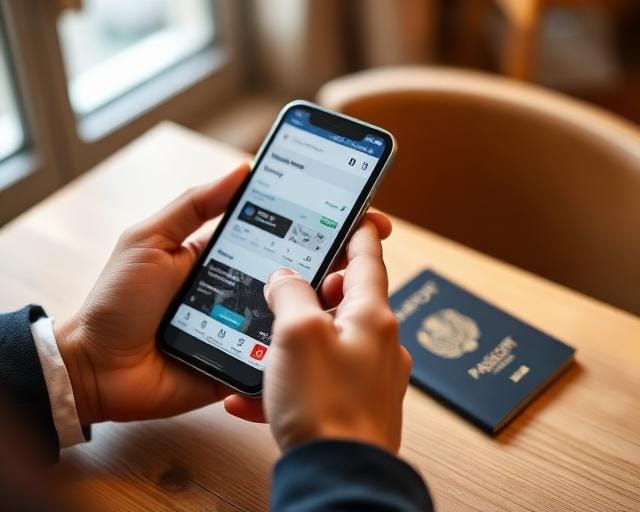
- Start an HSBC or Barclays pre-arrival application if either bank operates in your home country and you have your CAS statement, or open a digital account such as Monzo using a UK address you can access — student accommodation confirmation or a friend’s address.
- Set up a multi-currency account (Wise or Revolut) if you want to hold and spend money the moment you land, before any UK current account is fully active.
- Request your university’s bank introduction letter as soon as your term-time address is confirmed in the student portal — some universities issue it instantly, others need a few working days.
After you land
- Activate or finish verifying any account you started before arrival, using your actual UK address.
- If you didn’t start a high-street account earlier, open one in your first two to three weeks — it typically has a longer processing time than a digital account and you’ll want it working before rent, deposits or a part-time job payroll need it.
- Avoid moving your entire term’s funds into a brand-new account on day one; see the mistakes section below.
- Update your visa sponsor or university records with your UK bank details only once the account is fully active, not pending.
Mistakes that cost people time or money
Depositing a large lump sum immediately
A sudden large deposit into a brand-new account is a standard trigger for an automatic anti-money-laundering review, which can freeze the account for days while the bank asks where the money came from. Move funds in over a few transfers where possible, and keep records — a scholarship letter, sponsor statement, or loan sanction letter — ready to send if asked.
Confusing the bank’s checks with the visa’s checks
A bank declining your application is a bank decision, not a Home Office decision, and it does not affect your immigration status. The reverse is also true: a question from your bank about proof of address has nothing to do with the UK’s 28-day bank statement rule, which applies to the visa application itself, not to opening an account once you’re enrolled. Keep the two processes mentally separate so a delay in one doesn’t make you panic about the other.
Treating a digital account as a complete substitute
Monzo and Starling are genuinely useful and, for many newcomers, faster to open than a high-street account. But a thin UK financial history can matter later — for a phone contract, a guarantor-free tenancy, or a future credit application — and some landlords and employers still default to expecting a recognisable high-street account for payroll or standing orders. Treat a digital account as your fast first account, not necessarily your only one.
Relying on an out-of-date document checklist
Guides written before late 2024 still tell students to bring a BRP. If a university PDF, agent, or bank branch form asks for a BRP number and you only have an eVisa, say so directly and ask what the bank accepts instead — do not leave the field blank and hope, and do not assume the application is broken.
Choosing between them
Open a digital account before you travel if your priority is having a working UK debit card and app on the day you land, and you can supply any UK mailing address, even a temporary one. Start a high-street application before you travel if HSBC or Barclays operates in your home country and you want an account tied to a bank with a longer UK track record before you need to show banking history for a tenancy or job. Do both if you can — they solve different problems and neither blocks the other. Whichever you pick, the practical bottleneck is rarely the bank; it’s getting your university bank letter and your address confirmation lined up before you need them, which is worth requesting the same week you accept your offer of accommodation. If cost of living is still shaping where you’re applying, AbroadPilot’s guide to the cheapest UK cities to study in covers how rent and banking access interact by location.
Key Takeaways
- HSBC and Barclays offer pre-arrival applications for eligible students using a CAS statement and passport; digital banks like Monzo and Starling generally only need any UK mailing address.
- BRP cards stopped being issued after 31 October 2024 and every BRP has now expired; even the narrow 2026 wind-down window doesn’t cover everyday checks like banking. Prove status with an eVisa and a UKVI share code instead.
- A university bank introduction letter is the standard, usually free fix for the proof-of-address problem.
- Large first-week deposits commonly trigger a review that freezes new accounts — move money in stages and keep source documents ready.
- A bank decision and a visa decision are separate processes; a problem with one does not automatically mean a problem with the other.
FAQ
Can I open a UK bank account before I arrive?
Yes, with some banks. HSBC and Barclays both run application routes that start with your Confirmation of Acceptance for Studies (CAS) statement and passport before you travel, and most digital banks such as Monzo let you apply from your home country once you have a UK address to send the card to — even a friend’s address or your student accommodation.
Do I need a Biometric Residence Permit to open an account?
No. BRP cards stopped being issued to new applicants after 31 October 2024, and every BRP has now expired. A narrow set of uses for an already-expired card — signing in to view an eVisa, creating a UKVI account, applying to extend permission — survives until 31 December 2026, but that does not cover everyday identity checks like a bank counter. Generate a share code through your UKVI account on GOV.UK instead, and check with your chosen bank which format it currently accepts before you apply.
What if I don’t have a fixed UK address yet?
Ask your university’s international student office for a bank introduction letter (sometimes called a bank letter or certifying letter) on official letterhead confirming your name, course and term-time address. Most UK banks accept it in place of a utility bill, and several universities generate it instantly through the student portal.
Which bank is cheapest for sending money home?
This varies by corridor, amount and how often the exchange rate moves, so AbroadPilot will not quote a fixed fee here. Compare your bank’s international transfer fee against a dedicated remittance or multi-currency provider before each transfer rather than assuming your main current account is the cheapest route.
Can I use Revolut or Wise instead of a UK bank?
They are useful for holding and spending money in the days around arrival, but confirm what protection applies to your specific account before treating one as your only UK account — coverage under the Financial Services Compensation Scheme (FSCS) depends on the exact product and provider, and some balances are held as e-money rather than a deposit.
What to expect next
Expect more UK banks to formally update their onboarding forms and branch processes around the eVisa transition as the last BRP transition window closes at the end of 2026; some smaller providers and university partnership schemes are still catching up. Until then, the safest approach is to ask your specific bank directly which status document it wants rather than assuming last year’s guide — including this one, eventually — is still current.
The Bottom Line
You do not need to choose one UK bank and hope. Start a digital account or a pre-arrival high-street application before you fly if the documents allow it, sort your university bank letter early, and treat the eVisa share code as your default proof of status unless a bank tells you otherwise.
Free tools for this
- Proof of Funds Calculator — the exact balance and holding period for your destination
- Proof of Funds by Country — side-by-side comparison of what each government actually requires
Related Guides
- UK Visa Guide 2026: Apply From Nigeria & Ghana Easily
- The UK 28-Day Bank Rule: The Mistake That Fails Applicants
- UK Student Visa Credibility Interviews: What Fails You
- Cheapest UK Cities to Study In as an International Student
Official & Verified Sources
- GOV.UK: View your eVisa and get a share code to prove your immigration status
- GOV.UK: Biometric residence permits
- UKCISA: Opening a bank account
Last updated: September 19, 2026. Bank requirements, fees and account features change without notice — always confirm current details on the official pages linked above and directly with the bank before applying.
If you’ve opened a UK account as a newcomer recently, tell us in the comments which route worked for you — it helps the next reader arriving with the same questions.