
This post contains affiliate links.
Quick summary: Halal food for international students is a street-by-store question, not a country-by-country one — availability depends on the specific shop, not your destination’s reputation. Use a certifier’s public listing (HMC, IFANCA) or a directory like Zabihah rather than a sign in a window, confirm whether an ethnic grocery chain actually operates near your campus before counting on it, and ask your international student office about faith and cultural societies before searching social media. Build this list in your first month, and budget separately for the fact that specialty groceries usually cost more than local staples.
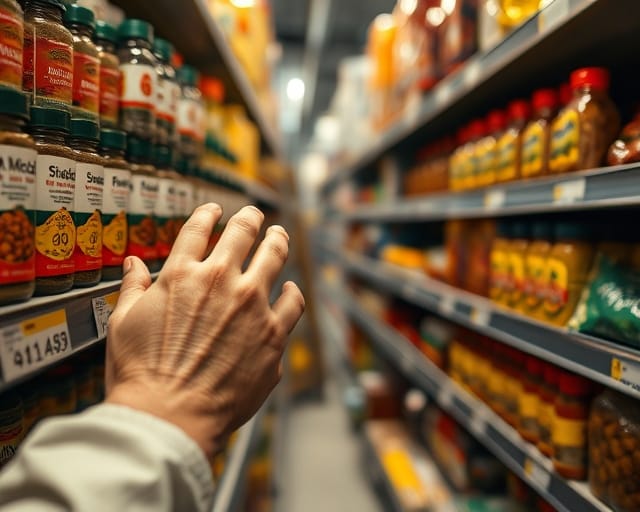
Why “Does This Country Have Halal Food?” Is the Wrong Question
Almost every student asks a version of the same question before they leave: does the UK have halal food? Does Canada? The question feels reasonable, and it produces a reassuring but useless answer — yes, generally, somewhere. It does not tell you whether the grocery store six minutes from your actual dorm carries anything you can rely on.
The real question is narrower and more useful: which two or three specific sources near me are actually verified? A halal-labelled kebab shop two streets from campus and a national supermarket chain’s halal aisle are not interchangeable claims — one may be certified by a recognized body, the other may simply be using the word. Once you start asking the narrow question instead of the broad one, the search gets much faster.
The same logic applies beyond religious dietary needs. A Nigerian, Ghanaian, Indian or Filipino student looking for home groceries and community abroad is really asking the same question in a different shape: not “is there a diaspora here,” but “which specific shop, society or group near me actually exists and is active.” This sits alongside the broader adjustment most students go through in their first weeks — AbroadPilot’s culture shock survival guide covers that wider process; this guide is about the narrower, practical piece of it: what you eat and who you eat it with.
What Changed: Certification and Apps Replaced Word of Mouth
A generation ago, finding halal food or diaspora groceries abroad depended almost entirely on asking around — a mosque community, a cousin who arrived earlier, a taxi driver. That still works, but it is no longer the only option, and it is not always the most reliable one.
Two things changed the picture. First, formal halal certification bodies now publish public listings you can check yourself. The Halal Monitoring Committee (HMC) in the UK, established in 2003, certifies over 700 restaurants, butchers and abattoirs under a hand-slaughter-only standard — stricter than some other certifiers, which matters if method matters to you. In the US, IFANCA (Islamic Food and Nutrition Council of America), founded in 1982, certifies products and facilities under its Crescent-M symbol. Second, directory platforms compiled scattered listings into a searchable map. Zabihah, running since 1998, lists more than 50,000 halal restaurants, grocers and prayer spaces across over 100 countries, each tagged with its certifying authority where known.
Neither replaces the other. A directory tells you where to look; a certifier’s own listing tells you whether a specific claim is backed by an actual standard.
Key Facts: Certifiers, Directories and What They Actually Do
These are tools, not guarantees — verify the specific outlet near you rather than assuming national coverage.
| Resource | What it is | What it’s useful for |
|---|---|---|
| Halal Monitoring Committee (HMC) | UK halal certification charity, hand-slaughter standard, founded 2003 | Checking whether a UK restaurant or butcher is certified, not just labelled |
| IFANCA | US halal certification body, Crescent-M symbol, founded 1982 | Checking whether a packaged product or facility is certified in the US and beyond |
| Zabihah | Global halal restaurant, grocery and prayer-space directory since 1998 | Discovering options near you across most study-abroad destinations, with certifier tags where available |
| MSA National | Umbrella body for Muslim Students Association chapters across US and Canadian campuses since 1963 | Finding a campus community, prayer space and often a vetted list of nearby halal options |
None of these are government agencies, and none can promise a specific restaurant’s practice on a given day — they are the best verification layer available, not a substitute for asking directly when it matters.
Halal Groceries for International Students: What Actually Exists Where
“International student” groceries are not one category. What you’re looking for — halal meat, West African staples, Indian spices and pulses, or Filipino products — exists in very different retail shapes depending on where you land, and assuming a national chain covers all of it is the most common mistake.
| Category | What to actually check |
|---|---|
| South Asian groceries (US) | Patel Brothers is the largest South Asian grocery chain in the US, with roughly 50 stores concentrated in about 20 states, mostly in the eastern half of the country. Confirm a location exists near your specific city before relying on it — large parts of the country have none. |
| Filipino groceries (US & Canada) | Seafood City is the largest Filipino grocery chain in North America, with stores concentrated in California, Nevada, Texas, Washington, Illinois, Hawaii and Arizona in the US, and Ontario, Manitoba and Alberta in Canada. Check its store locator rather than assuming coverage in your province or state. |
| Pan-Asian groceries (US, Canada, UK) | H Mart operates the largest Asian grocery footprint in the US (around 100 stores), plus locations in Canada and two in the UK. Coverage stocks Korean, Filipino, Indian and broader Asian products, but is concentrated in larger metro areas. |
| Middle Eastern / halal-forward (Quebec & Ontario) | Marche Adonis operates a dedicated halal meat counter alongside its regular one, with stores in Montreal, Laval, Quebec City, Mississauga, Scarborough and Ottawa — not available outside those areas. |
| West African groceries | Almost always independent, family-run shops rather than a national chain. Search “African grocery” or “African and Caribbean grocery” plus your neighbourhood name on Google Maps rather than looking for a brand name. |
| General supermarkets (UK) | Tesco, Sainsbury’s and Morrisons stock halal-labelled products, often concentrated in a “World Foods” aisle for ready meals, with halal meat availability varying by individual store — check the specific branch, not the chain nationally. |
| General supermarkets (Australia) | Industry reporting indicates much of the fresh meat sold at Coles and Woolworths comes from halal-accredited processors, though it is not always labelled as halal on the shelf. Check for a certification symbol or ask staff directly rather than assuming. |
The pattern across all of these: chains exist, but they are regional, not national. Check the store locator for your actual city before you build a routine around any of them — and before you finish packing, revisit AbroadPilot’s guide to what to pack for study abroad for what’s worth bringing versus buying on arrival.
Building Your First-Month List: A Practical Sequence
Do this roughly in order, ideally starting before you arrive so your first two weeks aren’t spent guessing.
- Search Zabihah for your destination city before you travel. Note two or three halal restaurants and at least one grocery listing, along with their certifying authority if shown.
- Check whether a relevant ethnic grocery chain operates near your specific campus using the chain’s own store locator — not a general web search, which often surfaces outdated listings.
- Email your university’s international student office and ask directly whether there is a registered Muslim Students Association chapter, multi-faith chaplaincy, or cultural and diaspora society for your background. Many of these exist without strong online visibility.
- Join the MSA chapter or diaspora society’s communication channel (usually WhatsApp, Discord or a campus platform) in your first week — members often maintain their own informal list of trusted local options that never made it onto a public directory.
- Confirm the general supermarket nearest your accommodation and what it actually stocks, rather than assuming based on the chain’s reputation elsewhere.
- Budget separately for specialty groceries once you know real prices — see the section below on why this catches people out.
This sequence fits naturally alongside the broader move-in process covered in AbroadPilot’s first week abroad checklist, where SIM cards, banking and transit compete for the same early days.
Risks and Mistakes That Actually Cost People Time and Money
Most problems here are avoidable once you know they’re common.
Trusting a “halal” sign without checking further. In many countries, the word isn’t regulated for restaurant signage the way it is for certified packaged products. If certification specifically matters to you, look for a certifier’s mark or check the outlet against HMC’s or IFANCA’s own listing rather than the sign alone.
Assuming a chain’s national reputation applies to your specific branch. A supermarket chain stocking halal products in some cities doesn’t guarantee your local branch does. Check before you build a weekly shop around an assumption.
Underestimating the cost gap. Specialty and imported groceries — halal meat, South Asian spices, Filipino sauces, West African staples — typically cost more than local equivalents, sometimes significantly. Students who skip this step often find food spending higher than expected in month one — not because they bought more, but because they never priced the gap.
Waiting for community to find you. Diaspora and faith societies are usually easy to join once you know they exist, but they rarely go looking for new students individually. Reach out in week one rather than week six.
Relying only on social media searches. Facebook groups and subreddits for a city are useful for color and recent tips, but they are not verification — a claim repeated in a comment thread is not the same as a certifier’s listing or a store locator confirming a real address.
Decision Framework: What to Prioritize First
Not every student has the same constraint, so the right first step differs.
If halal certification is a religious requirement for you, start with HMC’s or IFANCA’s own listings for your destination, not a directory or a restaurant’s own claim — certification status is the one thing you shouldn’t take on trust.
If budget is your tightest constraint, start with the general supermarket nearest your accommodation and learn exactly what it stocks before spending time or transit money chasing a specialty chain that may be an hour away.
If isolation is your bigger concern than food itself, start with your international student office and a diaspora or faith society’s communication channel — community access tends to solve the food question indirectly, since members usually already know the reliable local options.
If you’re moving to a smaller university town, check early whether the nearest city with real options is reachable by transit, and factor that distance into your routine from the start rather than discovering it later.
Key Takeaways
- Halal availability is a street-level question, not a national one — check the specific store and certifier, not the country’s reputation.
- HMC and IFANCA are certification bodies with public listings, not government agencies — use their directories rather than trusting a sign in a window.
- Ethnic grocery chains (Patel Brothers, Seafood City, H Mart, Adonis) exist in specific states and provinces — confirm one operates near your actual campus before counting on it.
- Your university’s international student office almost always keeps a list of registered faith and cultural societies — it’s usually the fastest path to community, not social media.
- Specialty groceries cost more than local staples — budget for them deliberately instead of discovering the gap at the till.
- A restaurant calling itself halal is not the same as a restaurant that is certified halal — the difference matters if certification is a religious requirement for you.
Frequently Asked Questions
Does “halal” on a restaurant sign mean the same thing everywhere?
No. Some countries require certification for the label to be used commercially, others don’t regulate it at all, and standards between certifiers differ (HMC, for example, requires hand slaughter with no stunning, which is stricter than some other certifiers). If certification matters to you religiously, check for a specific certifier’s mark or listing rather than trusting the word “halal” alone.
Is Whole Foods, Walmart or Costco a reliable place to find halal meat?
Sometimes, and it varies by store and by country. Large general supermarkets increasingly carry halal-labelled products, particularly in cities with sizeable Muslim populations, but coverage is inconsistent even within the same chain. Check the specific branch near you rather than assuming a national policy.
How do I find Nigerian, Ghanaian or Filipino food specifically, not just halal food?
African grocery stores are mostly independent, family-run shops rather than national chains, so search by neighbourhood name plus “African grocery” or “Caribbean grocery” on Google Maps rather than looking for a brand. Filipino groceries are more consolidated — Seafood City is the largest chain in North America, with stores concentrated in specific US states and three Canadian provinces, so check whether one is near your actual city before planning around it.
What if there’s no mosque, temple or diaspora group near my campus?
Ask your international student office directly — many universities have a multi-faith chaplaincy or prayer space that isn’t well advertised online, and some maintain informal contact lists for students of a given background even without a registered society. A nearby city’s community, reachable by transit, is also a realistic option in smaller university towns.
The Bottom Line
Stop asking whether your destination country has halal food, home groceries or community — all three exist almost everywhere international students go, in some form. The work is narrowing that down to the two or three specific, verified sources near you, and doing it before you’re hungry, homesick, or three weeks in with no idea where to look.
What to Do Next
Community and food access are two threads of the same early-arrival period covered in AbroadPilot’s culture shock survival guide and, for students navigating both cultural adjustment and racism or isolation specifically, the guide to the Black and African student experience abroad. If you haven’t yet sorted housing, AbroadPilot’s guide to finding housing abroad is worth reading first — your address affects which grocery stores and communities are realistically reachable.
Official & Verified Sources
- Zabihah — halal restaurant, grocery and prayer-space directory: zabihah.com/about
- Halal Monitoring Committee (HMC) — UK halal certifier: halalhmc.org/about
- IFANCA — US halal certifier: ifanca.org
- MSA National — Muslim Students Association umbrella body: msanational.org/about
- Seafood City store locator: seafoodcity.com/locations
- Patel Brothers store locator: patelbros.com/locations
Last updated: September 23, 2026. Store coverage, certification status and chain locations change — always confirm current details directly with the certifier, directory or store locator linked above before relying on them.
Found a reliable halal source, grocery chain or campus society we didn’t mention? Share it in the comments — the next student reading this is probably searching for exactly that.