This post contains affiliate links.
Quick summary: Most everyday items — toiletries, bedding, winter coats — are cheaper to buy at your destination than to carry from Lagos, Accra, Nairobi, Mumbai or Manila. What you cannot buy there are your original documents, prescription medication, and the right plug adapter. Pack light on volume, heavy on paperwork.
The Mistake Almost Everyone Makes
Most packing advice for study abroad reads like a generic travel checklist: pack layers, bring a universal adapter, don’t forget your passport. It treats a one-way move as if it were a two-week holiday.
The actual problem is different. Students from Nigeria, Ghana, Kenya, India and the Philippines tend to make one of two opposite mistakes: they either overpack consumables they could buy for less at their destination — extra toiletries, bedding, cooking equipment, a whole suitcase of home food — or they underpack the things that cannot be replaced abroad: original academic certificates, specific medication, or the one plug adapter that actually fits their new country’s sockets.
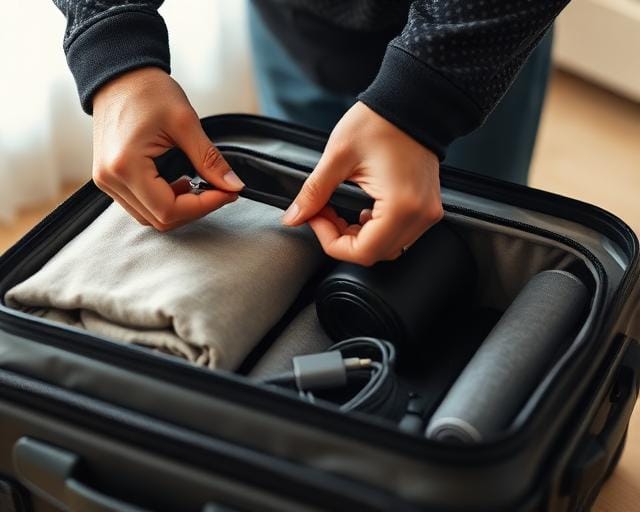
The mental model that fixes both mistakes at once: ask whether an item is replaceable at your destination, and at what cost, before you decide whether to carry it. If it’s replaceable and cheap locally, buy it there. If it’s irreplaceable, fragile, or something a customs officer will ask about, it goes in your hand luggage, not your checked bag.
Why This Costs People Money and Time
Overpacking has a direct price: airlines charge for excess baggage, and those fees are set by the airline and your specific fare class, not by a single global rule — always check your own ticket’s allowance before you pack, because it can differ even between two people on the same flight.
Underpacking the wrong things is worse. A student who checks their only degree certificate in a bag that gets delayed can miss their own enrolment appointment. A student who packs six months of medication without a doctor’s letter can have it confiscated at customs. A student who assumes their food will clear customs untouched can be fined for an undeclared item they didn’t know was restricted.
What Changed Recently
Two rules worth knowing before you pack food or medication:
- Since 12 April 2025, Great Britain no longer allows cattle, sheep, goat or pig meat, or dairy products, to be brought in from European Union countries for personal use, following a rise in Foot and Mouth Disease cases in Europe — on top of the long-standing ban on meat and dairy from most non-EU countries.
- As of January 1, 2026, master’s and doctoral students starting at a public Canadian Designated Learning Institution no longer need a Provincial or Territorial Attestation Letter (PAL/TAL) with their study permit application. Undergraduate, college and private-institution applicants generally still do — check your own study level against canada.ca’s current PAL guidance before you assume either way.
Key Facts: Power, Plugs and What Actually Differs by Country
Every laptop, phone charger and hair straightener you own was built for a specific plug shape and voltage. Get this wrong and you either can’t plug in at all, or you damage a device that wasn’t built for the local voltage.
| Destination | Plug type | Voltage / frequency | What this means for you |
|---|---|---|---|
| United Kingdom | Type G (three rectangular pins) | 230V, 50Hz | Nigerian and Ghanaian sockets are also Type G at similar voltage, so UK-bound students from those countries often don’t need an adapter at all — Indian and Filipino students do. |
| United States & Canada | Type A/B (flat pins) | 120V, 60Hz | Lower voltage than most of Africa, India and the Philippines. Check any appliance with a heating element (hair straighteners, kettles) for dual-voltage support before assuming it will work — a device rated only for 220–240V can underperform or fail on 120V, and the reverse can damage a 120V-only device. |
| Australia | Type I (flat pins in a V shape) | 230V, 50Hz | Different pin shape from all of the above; you will need an adapter regardless of where you’re travelling from. |
Laptops, phone chargers and most modern electronics are already dual-voltage (check the small print on the charger brick for “INPUT: 100–240V”) — for those, you only need a plug shape adapter, not a voltage converter. A hair dryer, straightener, iron or kettle is far less likely to be dual-voltage; check before you pack it.
The Packing List, Split by What Actually Matters
1. Documents You Physically Cannot Replace Abroad
Carry these in your hand luggage, never checked. If your checked bag is delayed, you still need to be able to attend your enrolment appointment and prove your immigration status.
- Passport, valid for the full length of your program plus buffer time
- Your visa or study permit approval, plus the underlying acceptance document that made it possible — the Form I-20 (US, Certificate of Eligibility for Nonimmigrant Student Status, issued only by an SEVP-certified school), the CAS reference number (UK, Confirmation of Acceptance for Studies, issued by your licensed sponsor institution), or your Letter of Acceptance from a Designated Learning Institution (Canada)
- Original academic transcripts and certificates, plus at least one certified copy of each — universities and, where relevant, credential evaluators want originals for verification
- Proof-of-funds documents you used in your visa application, in case you’re asked for them again on arrival
- Admission/offer letter and proof of any tuition deposit paid
- Travel and health insurance confirmation
- Passport-sized photographs in the specification your destination country actually uses — sizes and background-colour rules differ by country
- Accommodation confirmation and your first few nights’ address, in case an immigration or airline official asks where you’re staying
AbroadPilot’s own printable visa application document checklist covers the fuller pre-application list if you haven’t finished gathering these yet.
2. Medication and Health Items
Carry a supply of any prescription medication in its original packaging, in hand luggage, with a doctor’s letter or the prescription itself describing the dosage and why you need it. Rules on what counts as controlled or restricted vary by destination country, and a medication that’s freely available at home can require documentation — or be restricted entirely — elsewhere. Check your destination country’s customs authority before you travel rather than assuming.
3. Clothing: Buy the Bulk, Bring the Specifics
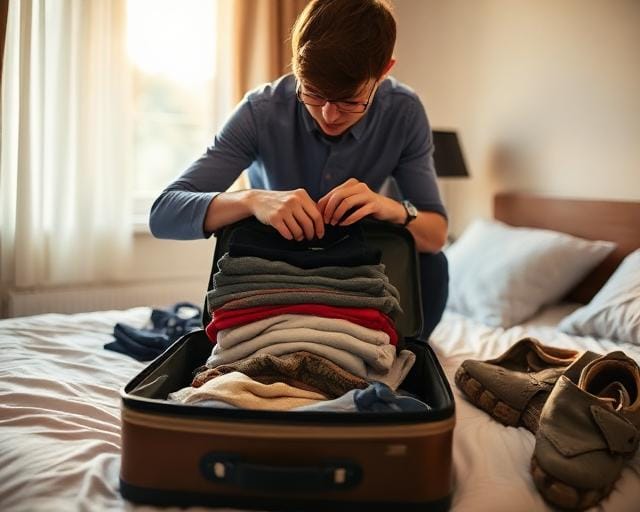
Winter coats, boots and heavy bedding are bulky, heavy, and usually cheaper to buy at your destination — often secondhand or during seasonal sales — than to bring from home and pay excess baggage on. What’s worth bringing: clothing suited to your home climate that you’ll still wear indoors or in warmer months, and one or two versatile layers to get you through your first week before you’ve had a chance to shop. Check the average temperature for your actual arrival month at your specific city, not just the country — a January arrival in Toronto and a January arrival in Los Angeles need nothing alike.
4. Food From Home
You can generally bring commercially packaged, sealed, non-perishable items — spices, dried goods, packaged snacks — but the rules on meat, dairy, fresh produce and homemade food are strict and enforced with fines, not warnings.
| Destination | What’s restricted | What happens if you skip declaring it |
|---|---|---|
| United States | Meat, fruit, vegetables, plants, seeds and animal products all require declaration on your customs form, whether or not you think they’re allowed. | A civil penalty starting at $300 for a first offence. Items you do declare are simply confiscated if inadmissible, with no penalty for the honest declaration. |
| United Kingdom | Meat and dairy from most countries outside a short list of exemptions, and, since April 2025, from EU countries too. Fish, honey and eggs are allowed in limited quantities. | Seizure and destruction at the border. |
| Canada | All food, plant and animal products require declaration; personal-use exemption limits apply. | Quantities over the exemption limit can attract duty of 150–300% of the item’s value. |
When in doubt, declare it. Every one of these authorities treats an honest declaration of an inadmissible item as a simple confiscation — it’s the undeclared item that gets you fined.
5. Electronics and Money
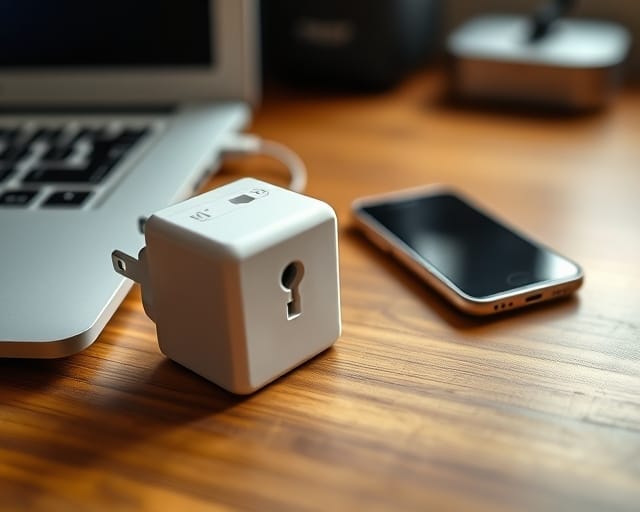
Bring your laptop, phone and chargers in hand luggage, plus one plug adapter matched to your destination (see the table above). Bring at least one internationally-usable payment card and a small amount of the local currency for your first 24–48 hours — enough for a taxi, a meal and a SIM card before you’ve had time to open a local bank account or activate a card that works there.
Risks and Mistakes That Actually Happen
- Checking a bag that holds your only passport, I-20/CAS/acceptance letter or certificates can turn a delayed or misrouted suitcase into a missed enrolment appointment. Keep these in your carry-on, always.
- Student and economy fares on the same route can carry different baggage allowances, and a relocation-sized suitcase often exceeds a standard leisure limit. Confirm your specific ticket before you pack, not at the check-in counter.
- A device that isn’t dual-voltage can simply fail, or be damaged, when plugged into a country with a different voltage — check the input rating printed on the charger or appliance itself before you assume an adapter alone fixes it.
- Bringing homemade or fresh food without declaring it turns a manageable customs stop into a fine you didn’t budget for, on top of a stressful first hour in a new country.
- Packing a full winter wardrobe for a climate you haven’t actually checked wastes both money at home and luggage weight you needed for something else.
The Decision Framework
Pack heavier if: you’re moving for a multi-year degree, you’re relocating to a smaller city with fewer big-box or secondhand shopping options, or your program starts in the depths of winter and you land with no time to shop before classes begin.
Pack lighter and plan to buy locally if: you’re on a shorter program, you’re landing in a large city with accessible shopping and secondhand markets, or your budget is tighter on excess-baggage fees than on a first-week shopping trip. Either way, the documents section above isn’t optional in either scenario — it travels with you regardless of how much or little else you bring.
Key Takeaways
- Buy bulky, replaceable items — coats, bedding, kitchenware — at your destination; carry irreplaceable documents and medication in hand luggage.
- Check your destination’s plug type and voltage against your home country’s before you assume an adapter alone will do the job.
- Declare food honestly at customs — an honest declaration of an inadmissible item is confiscated, not fined; an undeclared one can cost you hundreds of dollars.
- Confirm your specific airline ticket’s baggage allowance before packing, since it varies by fare and route, not by a single global rule.
- Carry your passport, visa/study permit approval, I-20/CAS/acceptance letter and original certificates on your body, never in a checked bag.
Frequently Asked Questions
Can I bring home-cooked food or spices in my checked luggage?
Commercially packaged, sealed, non-perishable items like spices and dried goods are generally allowed if declared. Fresh, homemade, or animal-derived food faces much stricter rules in the US, UK and Canada — check the specific customs authority for your destination before you pack any of it, and declare everything you bring regardless.
Do I need a voltage converter or just a plug adapter?
Check the fine print on the device itself. If it says something like “INPUT: 100–240V,” it’s dual-voltage and only needs a plug shape adapter. If it lists a single voltage, you may need a converter as well, or it may simply not be safe to use at your destination’s voltage.
Should I carry original certificates or just copies?
Carry the originals in your hand luggage, and bring at least one certified copy of each separately. Universities and credential evaluators frequently need to see an original for verification, and losing your only copy in transit is a preventable problem.
What happens if my checked bag with my documents is delayed?
This is exactly why your passport, visa or study permit approval, and acceptance documents should never go in a checked bag. If they’re in your hand luggage, a delayed suitcase is an inconvenience, not a missed enrolment appointment.
Conclusion and What to Do Now
The students who arrive prepared aren’t the ones who packed the most — they’re the ones who correctly sorted what’s replaceable from what isn’t before they zipped the suitcase. Start your own list today by pulling every original document you’ll need into one folder, checking your destination city’s actual climate for your arrival month, and confirming your specific flight’s baggage allowance before you pack a single bag.
The Bottom Line
Pack your documents, your medication and the right adapter as if they cannot be replaced — because at your destination, they largely can’t. Everything else is a shopping trip you can take after you land.
Related Guides
- Visa Application Document Checklist (Printable)
- Airport, Immigration and Arrival: The Questions You Will Actually Be Asked
- UK Student Bank Account: Which One, and When
- US Student Bank Account: No SSN? What Actually Works
- Canada Student Bank Account: No SIN? What Actually Works
Official & Verified Sources
- U.S. Customs and Border Protection — Bringing Food into the U.S.
- GOV.UK — Bringing Food into Great Britain
- Canada Border Services Agency — Bringing Food, Plant and Animal Products into Canada
- IRCC — Study Permits: Provincial or Territorial Attestation Letters
- Study in the States (DHS/SEVP) — Students and the Form I-20
- GOV.UK — Student Visa: Documents You Must Provide
Last updated: September 20, 2026. Customs, plug and immigration-document rules change — always confirm current details on the official pages linked above before you travel.
Already packed and landed? Tell us in the comments what you wish you’d known before you zipped your suitcase — it might be exactly what the next reader needs.