
This post contains affiliate links.
Quick summary: Book your ticket after your visa or study permit is approved, not before — that’s explicit U.S. and UK guidance, and standard practice everywhere else. Turkish Airlines is one of the few carriers with a documented student fare (up to 20% off, 40kg baggage for eligible ages). Most other “student flight deals” are travel-platform discounts, not airline policy, so verify every claim before you pay.
By Olami · Last updated September 21, 2026
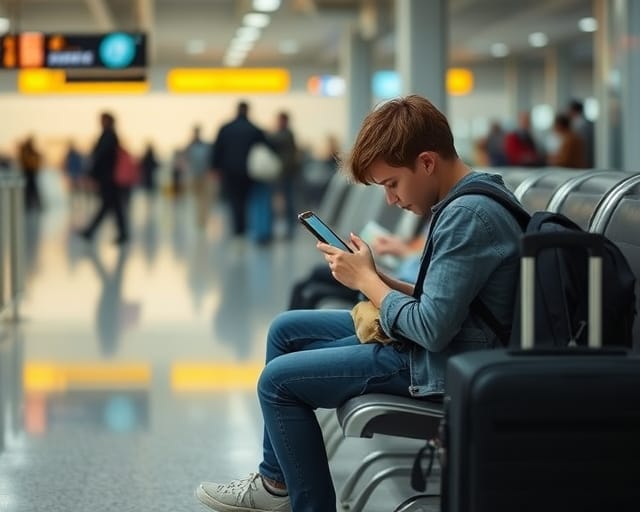
Why Your Flight Is the Riskiest Purchase in Your Study-Abroad Budget
By the time you’re shopping for a flight, you’ve already spent on an application fee, maybe a language test, maybe a sponsor’s bank letter. The flight is often the single largest discretionary purchase left in the process — and it’s the one most applicants buy at exactly the wrong moment.
The costly misunderstanding is treating “cheap” and “safe” as the same question. A cheap non-refundable fare bought the week you submit your visa application is not a deal if your visa is delayed eight weeks or refused outright. The question that actually matters is not how cheap is this ticket but who eats the cost if my visa doesn’t come through in time, or at all.
For applicants funding this from Lagos, Accra, Nairobi, Delhi, Mumbai or Manila, that cost is rarely trivial. A non-refundable long-haul fare can represent weeks of income or a chunk of the same pooled family funds that went into your proof-of-funds documents. Treat the flight with the same discipline you applied to your bank statement.
What’s Actually True Right Now About Student Fares
As of September 2026, the student-travel booking market has been consolidating. StudentUniverse, long the best-known name in discounted student and youth fares, rebranded as BYOjet for Students. The underlying idea hasn’t changed: a booking platform negotiates or aggregates discounted fares aimed at students roughly 18–25, verified against a student ID or enrollment proof.
What has not changed is the core guidance from every major destination’s immigration process: don’t finalize non-refundable travel until your visa decision is in hand. That advice predates this year and will almost certainly outlast whatever the current booking platform is called.
Student Flight Deals: What’s Verified, What’s Marketing
Airlines rarely publish a universal “student policy.” A handful have one you can actually check; most “student deals” you’ll see advertised are travel-agency discounts layered on top of a normal fare, not an airline benefit.
| Option | Discount | Baggage | Eligibility |
|---|---|---|---|
| Turkish Airlines student fare | Up to 20% off, first date change free | 40kg (or 2x23kg where the “piece concept” applies) | Ages 12–34 on international routes; 12–25 domestic and to Ercan |
| Student travel platforms (e.g., BYOjet for Students and similar consolidators) | Varies by route and partner airline | Follows the partner airline’s own fare rule for the ticket booked — not a separate student allowance unless the airline itself grants one | Typically requires student ID or enrollment proof; age ranges vary by platform |
| Standard economy fare, any airline | None | The airline’s published economy allowance for that route and fare class | None |
The takeaway: don’t assume extra baggage from a “student deal” unless the airline’s own page confirms it. Turkish Airlines is a real, verifiable example. For any other carrier, check that airline’s own student or baggage page — not the travel blog that told you about the deal — before you plan your packing around an allowance that may not exist.
When Should You Book Your Flight?
Treat the flight as the last step in the visa sequence, not a parallel task.
- Secure your offer or acceptance letter first — CAS for the UK, I-20 for the US, letter of acceptance for Canada — before anything flight-related.
- Submit your visa or study-permit application. Most processes do not require a booked or paid flight at this stage, so check your specific instructions instead of guessing what’s required.
- While you wait, research and track fares without paying. Use fare alerts or a platform’s price-hold feature if one is offered, and avoid entering full card payment for a non-refundable seat during this window.
- Once approved, book promptly — fares to a fixed intake date typically climb as the start date nears, so the safe window is short.
- Price your baggage for a one-way move rather than a holiday. Add checked bags at the time of booking, since airport-counter excess fees per kilogram are almost always worse than paying in advance online.
- Check transit-visa rules on any connecting itinerary separately from your destination country’s study visa — some layover airports require one depending on your nationality and whether you leave the airport.

Risks and Mistakes
- A non-refundable ticket bought before your visa decision can cost you the full fare if the visa is delayed or refused. Ask the airline in writing whether it waives change or cancellation fees for a documented refusal — some do, many don’t, and you want the answer before you pay, not after.
- Some visa processes ask for proof of travel intent, which a flight reservation (not a paid ticket) can satisfy. Paying for a “dummy ticket” you never needed is a common and avoidable waste — confirm your actual requirement first, and see how to spot a visa or travel scam before paying anyone for a reservation service.
- Moving your life for a degree is not a two-week holiday. Check what to pack for study abroad and price your realistic bag count against the airline’s actual allowance before you book, not the week you’re packing.
- Most “student fares” don’t carry extra baggage unless the airline says so directly, as the table above shows — don’t plan your packing around an allowance that may not exist.
- A cheap itinerary with a long layover can quietly require a transit visa you didn’t budget time or money for.
Decision Framework
Book immediately once your visa or study permit is approved if your intake date is close and fares are already climbing — the waiting-for-a-better-deal window shrinks fast this close to departure. Take a short comparison window (a few days, not weeks) if your intake is still months away and you want to check a couple of student-fare platforms against each other. Never book a non-refundable fare before approval to “lock in” a low price — the potential loss on a refusal or delay almost always outweighs the saving. If your relocation baggage needs are heavy, weight a carrier with a documented student baggage policy, like Turkish Airlines, against the cheapest headline fare on a carrier that offers none.
Key Takeaways
- Book after your visa or study permit is approved, not before — that’s explicit US and UK guidance, and standard practice everywhere else.
- Turkish Airlines has a documented student fare with a 40kg baggage allowance for eligible ages; verify any other airline’s claim directly with that airline.
- A flight reservation, not a paid ticket, is usually enough where a visa process asks for proof of travel — check whether yours even requires one.
- Price excess baggage in advance online; airport counter rates for a one-way move are almost always worse.
- Check transit-visa requirements on any connecting itinerary separately from your destination country’s study visa.
FAQ
Do I need to buy a flight ticket before my student visa is approved?
Generally no, and doing so is the single most common flight-booking mistake in this process. The US State Department tells nonimmigrant visa applicants not to make final travel plans or buy tickets until the visa is issued, and UK university international offices give applicants the same advice for the Student visa. If your application asks for proof of travel intent, a flight reservation (not a paid ticket) usually satisfies it — confirm with your specific visa instructions before paying for anything.
What is a flight reservation or ‘dummy ticket’ for a visa application, and is it safe to buy one?
It’s a real, bookable itinerary held or reserved in your name without full payment, used to show onward travel intent where a visa process asks for it. Some are legitimate services; others collect payment for a reservation that expires before your appointment or was never real. Check first whether your visa route actually requires this at all — several major student-visa processes, including the UK’s, do not require any flight booking before a decision.
Do airlines really give students extra baggage allowance?
Some do, most don’t automatically. Turkish Airlines has a documented student fare with a 40kg allowance (or 2x23kg where the piece concept applies) for eligible ages. Many other carriers marketed as offering ‘student deals’ are actually fares sold through a booking platform, and the baggage allowance follows that airline’s normal economy rule for the fare class booked — not an automatic student upgrade. Verify the specific airline’s own student or baggage page before assuming you’ll get extra.
What happens to my money if I book a flight and my visa is then refused?
It depends entirely on the fare type. A standard non-refundable economy ticket is usually non-refundable for a visa refusal, though some airlines will refund or waive change fees with proof of refusal — ask the airline directly and get it in writing before you rely on it. A fully refundable or flexible fare costs more upfront but removes this risk, which is exactly why the standard advice is to wait until approval rather than gamble on a cheaper non-refundable seat.
Conclusion and Outlook
The student-travel booking market will keep changing names and platforms — StudentUniverse becoming BYOjet for Students is unlikely to be the last rebrand. What won’t change is the underlying logic: your flight is a purchase you make with certainty, and your visa decision is the only thing that gives you that certainty. Check your specific visa instructions for whether a booking is even required, verify any airline’s student-fare claim on that airline’s own page, and price your real baggage needs before you pay for the ticket, not after.
The Bottom Line
The cheapest flight is not the one with the lowest sticker price — it’s the one you can afford to lose if your visa doesn’t come through on schedule. Wait for approval, verify the fare and baggage terms directly with the airline, and price your relocation baggage before you book.
Related Guides
- What to pack for study abroad
- The questions you’ll actually be asked on arrival
- How to spot a visa or travel scam
- Your visa document checklist
Official & Verified Sources
- U.S. Department of State — visa guidance
- Turkish Airlines — student fare terms
- Government of Canada — preparing for arrival
- gov.uk — Student visa
Last updated: September 21, 2026. Fares, baggage terms and booking platforms change — always confirm current details on the official pages linked above before you pay for anything.
Have a flight-booking or baggage story from your own move? Tell us what you’d do differently in the comments.