This post contains affiliate links.
By Olami, AbroadPilot · Reviewed September 2026
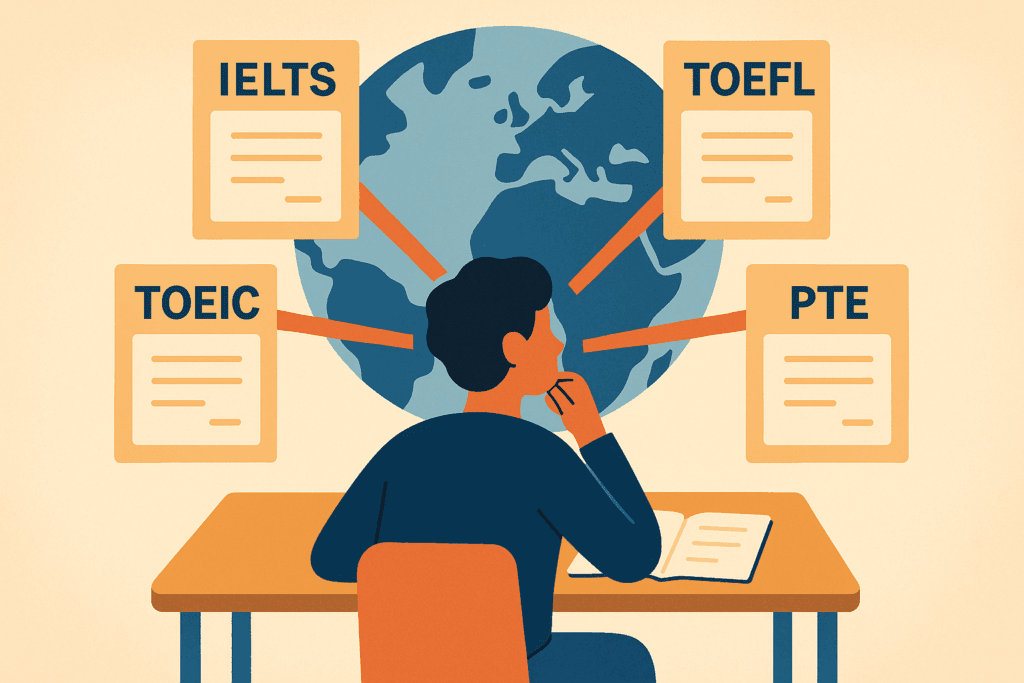
Australia is one of the few destinations where two tests — IELTS and PTE Academic — sit genuinely side by side in popularity, both for university admission and for the Student visa (subclass 500). This guide compares them specifically for the Australian pathway, including the difference between what your visa requires and what your course actually requires. For the full four-way comparison, see our IELTS vs TOEFL vs PTE vs Duolingo guide.

Two Different English Bars: Visa vs Course Entry
Australia’s Student visa (subclass 500) has its own “functional English” evidence requirement, assessed by the Department of Home Affairs, which exists to confirm you can reasonably get by — this is typically a lower bar than what your university sets for actual course entry. Your university’s course-entry English requirement is a separate, usually higher, academic bar, set by the institution itself. Many applicants satisfy the visa’s functional English requirement automatically once they’re enrolled in a full, English-taught principal course, since the Department generally accepts that enrollment as sufficient evidence. Always check current detail on the Department of Home Affairs subclass 500 page, since evidentiary requirements and accepted test lists are reviewed periodically.
Approved Tests for Subclass 500
Where evidence of English via a test is required, the Department of Home Affairs has historically accepted a defined list that includes IELTS, PTE Academic, TOEFL iBT, and Cambridge English qualifications. The Duolingo English Test’s position on this specific visa-evidence list has lagged behind its university admission acceptance — check the current official list before assuming it will satisfy the visa requirement, even if your university accepts it for admission. Our Duolingo English Test guide covers where it currently stands.
IELTS vs PTE for Australia: Key Differences
| IELTS Academic | PTE Academic | |
|---|---|---|
| Speaking format | Live examiner, face-to-face or video | Recorded, AI-scored |
| Result turnaround | Typically 3–13 days | Typically 24 hours–5 business days |
| Go8 acceptance | Universally accepted | Universally accepted, historically very strong in Australia |
| Best for | Candidates who prefer a live conversational interview | Candidates who want fast, objective, single-day computer testing |
In practice, Australian universities — including Group of Eight (Go8) institutions — treat IELTS and PTE Academic as close to interchangeable for admission purposes, so the decision usually comes down to personal test-taking preference, test-date availability near you, and how quickly you need results.
Typical Course-Entry Score Requirements
- Undergraduate: approximately IELTS 6.0–6.5 overall or PTE 50–58
- Postgraduate: approximately IELTS 6.5–7.0 overall or PTE 58–65
- Competitive Go8 programs: often IELTS 7.0+ or PTE 65+, particularly for law, education, and health-related degrees
These are planning ranges only — always confirm the exact figure your specific course requires, and cross-check it against the separate visa functional-English evidence requirement. See our full score equivalency table if your offer is stated in one test but you’re considering sitting the other.
Why PTE Is Especially Popular Among Australia-Bound Applicants
PTE Academic has a long-standing presence in the Australian market, partly because its fast, fully computer-scored turnaround suits students working against tight visa-lodgement timelines. If you’re applying close to intake deadlines and want to minimize the days between test day and having a result in hand, PTE is often the faster path. If you’d rather have a live conversation for the speaking component and don’t mind a slightly longer wait for results, IELTS remains equally valid and just as widely recognized.
FAQ
Is PTE or IELTS better accepted in Australia?
Both are equally well accepted across Australian universities, including Go8 institutions, and both appear on the Department of Home Affairs’ evidence-of-English list for the subclass 500 visa. The choice comes down to personal preference and logistics, not acceptance.
Does my visa English requirement match my course’s English requirement?
Not necessarily. The subclass 500 visa’s functional English evidence requirement is typically a lower threshold than what your specific course requires for academic entry. Meeting your course’s entry requirement generally covers the visa requirement too, but confirm both separately.
Is Duolingo accepted for an Australian student visa?
Its position on the Department of Home Affairs’ accepted evidence list has lagged behind its university admission acceptance. Check the current official list before relying on a Duolingo score for the visa itself.
Related Reading
- IELTS vs TOEFL vs PTE vs Duolingo: Which to Take and What Score You Need
- Computer-Delivered vs Paper-Based IELTS: Which Gets You a Faster Slot
- Duolingo English Test: Full Prep Guide and Sample Questions

Olami is the founder and lead writer at AbroadPilot. He started the site after going through the visa process himself — a German student visa in 2019 and a Canadian work permit in 2023 — and learning first-hand how confusing official immigration language can be, how often rules change, and how easy it is to lose money to bad advice. He spent three years as an international education and travel consultant, helping people source and verify the information that landed their visas and planned their trips. Every guide on AbroadPilot is built from official sources — embassy pages, government immigration portals, and .gov fee schedules — and reviewed as requirements change. AbroadPilot does not sell visas or applications; it is a free resource to help readers apply with confidence.